
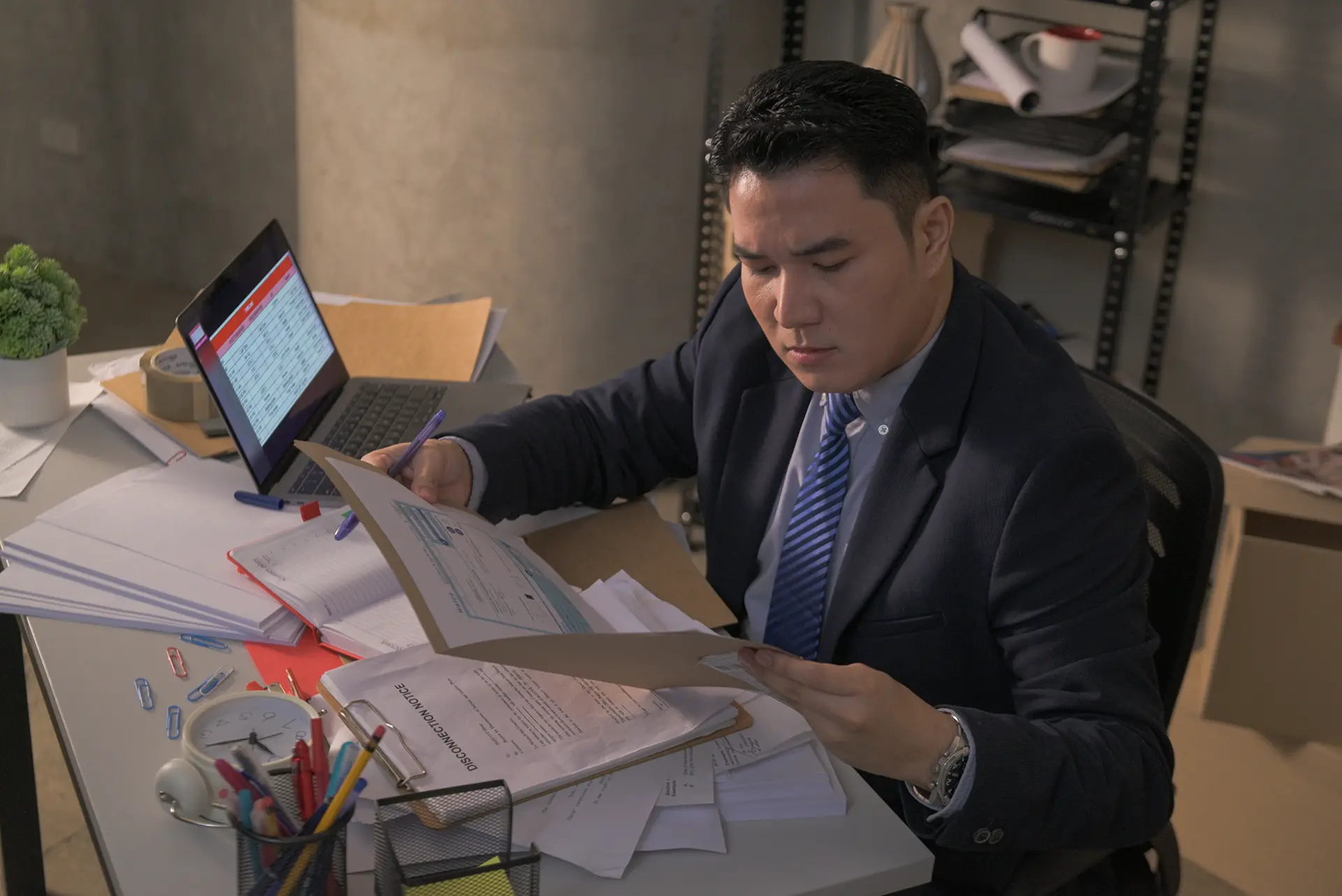
The value of storage services for businesses
Business growth in the Philippines is usually painted as a simple success story. More customers, more revenue. More demand. More expansion. More Progress.
But what rarely gets mentioned is what quietly grows alongside it. Not revenue, and not marketing share. But things.
Inventory multiplies faster than it moves. Documents, packaging, materials, and assets that once fit a lean operation now end up scattered across locations just to keep up. And at first, none of that felt urgent. Every decision made sense on its own.
Yet, over time, these small build-ups create something most businesses don’t notice until it starts slowing them down: storage pressure.
In the Philippines, that pressure builds up faster than most expect.
Growth in the Philippines doesn’t happen in a Vacuum
Unlike in more compact markets, business operations in the Philippines are shaped by geography, infrastructure, and costs. These factors directly affect how companies store and move goods.
Being an archipelago means supply chains are naturally fragmented. What can be stored in one place often needs to be distributed across several. Add to that Metro Manila’s traffic congestion, the rising cost of fuel and logistics, and the unpredictability of weather conditions, and storage stops becoming a matter of operational survival.
Typhoons disrupt transport routes. Flooding delays distribution. Heat and humidity affect sensitive goods. Even when demand is stable, movement isn’t always predictable. So businesses do what they can, usually by holding on to more inventory, building up buffer stock, and keeping goods closer to where they might be needed.
It felt like a smart move at the time, but in reality, it quietly increases the space needed just to keep things going.
When Storage Stops Being Invisible
Early on, most businesses don’t think much about storage. It just happens in the background, wherever there’s space. An empty room becomes storage. A back office turns into a holding zone. A rented warehouse becomes the catch-all for overflow.
But as operations grow, this informal approach starts to wear thin.
Goods aren’t stored in one place anymore. They’re spread across locations, managed by different teams, and tracked with varying consistency. Some inventory moves often. Some barely move at all. Some are needed now. Some just wait.
Poor systems can lead to fragmented information and disrupt timely deliveries across different spaces, systems, and teams.
The Problem Is Where Storage Lives
At a certain point, adding more space stops solving the problem. More rooms, warehouses, and more temporary spaces only add to the fragmentation if the systems stay the same. The real issue isn’t a lack of storage space. It’s the lack of a centralized, controlled environment to manage it.
When assets are scattered across offices, warehouses, and makeshift storage, they don’t just take up space. They also take up attention, time, and energy.
That’s when most businesses start to feel the real weight of growth. Not in revenue or demand, but in the growing struggle to keep everything in order.
Safehouse And The Shift from Storage to Control
This is where Safehouse changes the conversation. Instead of treating storage as an afterthought or a set of disconnected spaces, Safehouse gives you a dedicated environment where assets are actively managed, not just placed.
In practice, assets aren’t just stored. They’re always accounted for, tracked, and monitored, and organized so that retrieval and management are predictable rather than reactive,
At the same time, businesses get back what they often lose as they grow: space. Offices no longer have to double as storage. Work areas become cleaner, more focused, and more efficient because they’re not competing with unused inventory.
And when goods are needed, they’re not buried across locations or systems. They’re already organized, secured, and ready to move.
Growth Should Create Momentum, Not Clutter
Business growth in the Philippines will always be complex. Geography, infrastructure, and costs will continue to shape how companies operate and scale. But storage pressure doesn’t have to be part of that burden. Because the challenge is not simply about having more space.
It’s about having the right system for what growth creates. When storage is centralized, controlled, and managed, it stops being a silent source of friction.Safehouse helps businesses in the Philippines take control of hidden storage pressure that comes with growth by turning scattered, under-managed assets into a centralized, secure, and fully controlled system.